EDI and API Integration in Modern Logistics Platforms: A Practical Guide
The logistics technology stack runs on data exchange. EDI and API integrations are the connective tissue that allows TMS, ERP, WMS, and carrier systems to communicate — and getting them right is the difference between a logistics platform that works and one that creates as much overhead as it eliminates.
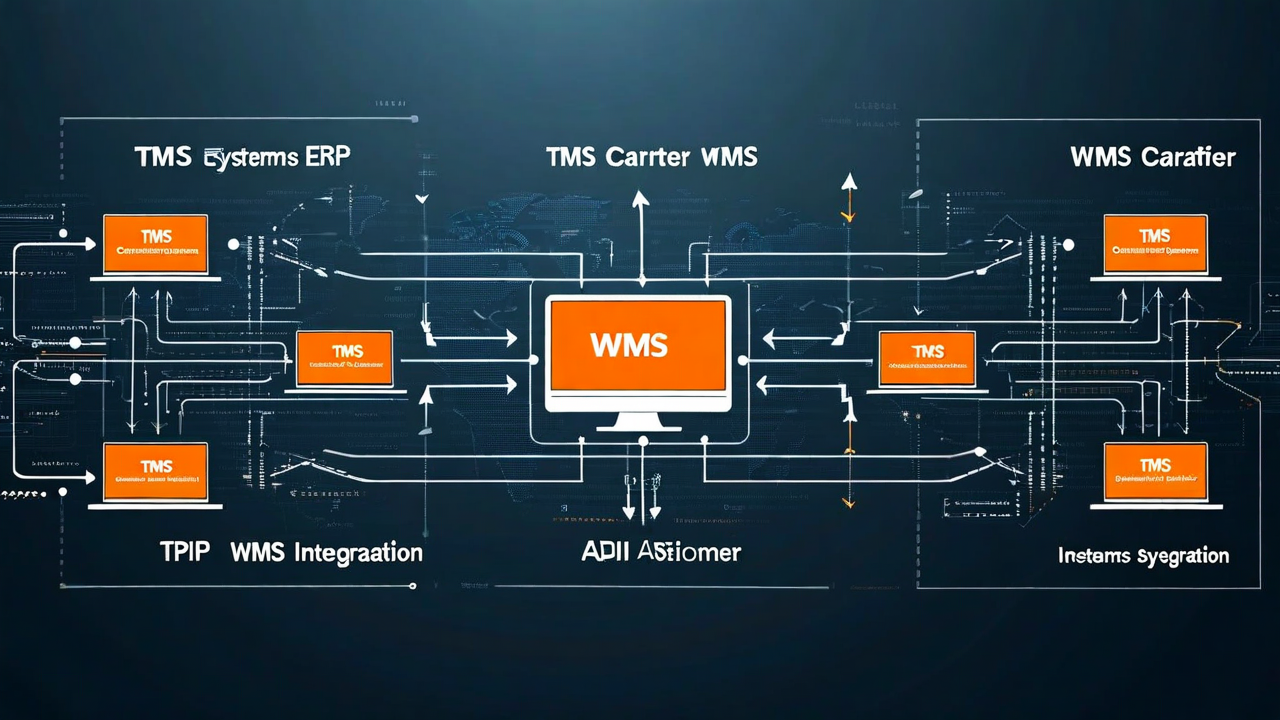
Logistics technology has evolved dramatically over the past decade, but the integration challenge has not gone away — it has gotten more complex. Modern logistics stacks include TMS systems, ERPs, WMS platforms, carrier portals, visibility providers, customs brokers, freight payment processors, and AI optimization engines. Each system needs to talk to others, and the data formats, protocols, and timing requirements for those conversations vary enormously.
EDI (Electronic Data Interchange) and APIs (Application Programming Interfaces) are the two dominant integration technologies in logistics, and they are not substitutes — they coexist in virtually every enterprise logistics environment. Understanding when to use each, how to architect the integration layer for reliability and scalability, and how to manage the operational complexity that integrations introduce is essential knowledge for logistics technology professionals.
EDI in Logistics: Still Relevant After 50 Years
EDI is one of the oldest electronic communication technologies in business, predating the internet by two decades. It defines a set of standardized message formats — transaction sets in EDI parlance — for exchanging structured business documents: purchase orders, shipping notices, invoices, load tender acceptances, and shipment status updates. In logistics, the ANSI X12 standard (dominant in North America) and EDIFACT (dominant in Europe and internationally) define the EDI transaction sets that carriers, shippers, and 3PLs use to communicate.
EDI remains the primary electronic integration mechanism for most large carriers and 3PLs, despite its age. Large TL, LTL, and ocean carriers continue to require EDI for load tendering (EDI 204), tender acceptance and rejection (EDI 990), shipment status updates (EDI 214), and freight invoice submission (EDI 210). Any shipper with meaningful volume on these carriers needs EDI capability to avoid the manual alternatives — phone calls, email confirmations, and manual data entry — that create overhead and errors.
The practical challenge with EDI is implementation complexity. Despite standardization, EDI implementations are never truly standard in practice. Every carrier has its own version of the X12 standard, with variations in which data elements are required or optional, what values are acceptable in specific fields, and how exceptions are handled. Implementing a new EDI trading partner typically requires a testing phase of 2-4 weeks and a set of partner-specific mapping configurations that must be maintained as the carrier's requirements evolve over time.
REST APIs: The Modern Integration Layer
REST APIs have become the preferred integration mechanism for modern logistics technology platforms. Unlike EDI, which uses structured file formats exchanged in batches, REST APIs enable real-time, request-response communication in JSON or XML formats that are easy to work with in modern programming languages. They are faster to implement, easier to debug, more flexible in their data structures, and support the real-time use cases that modern logistics platforms require.
The logistics technology space has seen a wave of API-first platform development over the past five years. New-generation TMS systems, visibility providers, rate engines, and freight payment processors expose well-documented REST APIs that enable rapid integration. Carriers are increasingly investing in API capabilities alongside their legacy EDI connectivity — particularly for less-than-truckload and parcel carriers where real-time rating and booking are competitive table stakes.
API security is an important consideration in logistics technology integration, particularly given the sensitivity of shipment data and the potential for rate shopping abuse. OAuth 2.0 authentication, rate limiting, and field-level encryption for sensitive data elements are standard requirements for production logistics API integrations. Logistics technology buyers should evaluate not just whether a platform offers API connectivity, but whether its API security architecture meets enterprise requirements.
Choosing Between EDI and API for Each Integration
The practical decision about whether to use EDI or API for a specific logistics integration depends on several factors: what the trading partner supports, what timing and latency requirements the use case demands, what data volumes are involved, and what the organization's existing integration infrastructure looks like.
Use EDI when the trading partner is a large carrier or 3PL that either requires EDI or offers better automation capabilities via EDI than API. Many large TL and LTL carriers have mature, high-reliability EDI implementations that support complex workflows like multi-stop routing, accessorial charge management, and invoice reconciliation at a level of detail not yet available via their API offerings. For these carriers, EDI is the pragmatic choice even for organizations that prefer API architectures.
Use APIs when real-time data exchange is required. Load tendering might work fine with EDI batch processing, but real-time spot rate comparison, live shipment tracking, or instant capacity availability queries require the sub-second response times that APIs provide. Any use case where a user is waiting for a response — like a logistics coordinator requesting rates before quoting a customer — requires API connectivity rather than batch EDI.
Hybrid architectures are the norm in enterprise logistics environments: EDI for carrier operational transactions, APIs for real-time data exchange with technology platforms, and webhooks or event streams for asynchronous notifications and status updates. The RouteBrain platform supports all three patterns, meeting customers where they are in their integration architecture.
Integration Architecture Patterns for Logistics
Beyond choosing between EDI and API for individual connections, the overall architecture of the integration layer significantly affects the reliability, maintainability, and scalability of logistics technology deployments.
Point-to-point integration — each system connected directly to each other system — is the simplest architecture to understand but becomes extremely difficult to maintain as the number of systems grows. With N systems, point-to-point creates up to N*(N-1)/2 connections, each with its own mapping, error handling, and monitoring requirements. Organizations with more than 4-5 logistics systems typically find point-to-point integration unmanageable.
Hub-and-spoke or middleware architecture solves this by introducing a central integration layer — an enterprise service bus, an iPaaS platform, or a custom integration service — that all systems connect to. Each system has a single integration connection to the hub, and the hub manages routing, transformation, and error handling for all message flows. This is significantly more maintainable than point-to-point and provides a single monitoring and management point for the entire integration landscape.
Event-driven architecture is the most scalable pattern for modern logistics platforms, particularly those with real-time visibility and alerting requirements. Instead of systems polling each other for updates, they publish events — shipment created, status updated, exception detected — to a message broker, and subscribing systems consume the events relevant to them. This decouples producers and consumers, allows independent scaling, and enables the real-time, event-triggered workflows that modern logistics operations require.
Data Quality and Mapping: The Hidden Integration Challenge
The technical connectivity between systems is often less challenging than the data quality and mapping problems that arise when connecting real-world systems with inconsistent, incomplete, or ambiguous data. In logistics, the most common data quality challenges involve location data, commodity codes, weight and dimension data, and carrier reference identifiers.
Location data normalization is a particular challenge in global supply chains. The same location might be referenced as "Chicago, IL," "USCHI," "CHI," or a specific facility code depending on the system. SCAC codes, IATA codes, UN/LOCODEs, and proprietary carrier location identifiers all represent the same physical locations in different formats. A robust integration layer needs a location master data capability that normalizes these references across systems.
Reference data management — maintaining consistent carrier codes, commodity classifications, and location identifiers across all connected systems — is often underestimated in logistics integration projects but is essential for data integrity. Organizations that invest in a master data management capability for logistics reference data dramatically reduce the volume of data quality exceptions that would otherwise require manual intervention.
Monitoring and Exception Management
Even well-designed integrations fail: messages get lost, transformation errors produce malformed data, partner systems go offline, and volume spikes overwhelm processing capacity. A mature integration monitoring capability that provides real-time visibility into message flow health, alerts on error rates above expected thresholds, and facilitates rapid diagnosis and resolution of integration failures is essential for keeping logistics operations running smoothly.
Every logistics integration should have defined SLAs for message processing latency, error rates, and exception resolution time. Without these SLAs, it is impossible to determine objectively whether the integration is performing as expected or to prioritize resolution when multiple issues are occurring simultaneously. Establishing and monitoring integration SLAs is an often-overlooked aspect of logistics technology governance that pays dividends in reduced operational disruption over time.
Key Takeaways
- EDI remains the dominant integration protocol for large carrier operational transactions despite its age; API is preferred for real-time data exchange and modern platform connectivity.
- Most enterprise logistics environments require hybrid EDI/API architectures; choosing the right pattern for each integration depends on trading partner capability, latency requirements, and data volume.
- Hub-and-spoke or event-driven architectures are more maintainable and scalable than point-to-point integrations as the number of connected systems grows beyond 4-5.
- Data quality and reference data management are frequently the most challenging aspects of logistics integration — more so than the technical connectivity itself.
- Integration monitoring with defined SLAs is essential for maintaining operational reliability and prioritizing exception resolution effectively.
Conclusion
Logistics integration is not glamorous, but it is foundational. The quality of the data exchange between logistics systems determines the quality of the decisions those systems can make. AI optimization platforms that receive incomplete, delayed, or inaccurate data cannot produce good routing recommendations regardless of their modeling sophistication. Getting the integration layer right is a prerequisite for getting value from the intelligence layer.
RouteBrain was built with integration as a first-class concern. Our platform supports EDI, REST API, and event-driven connectivity patterns and includes built-in data normalization for the most common logistics reference data challenges. Talk to our integration team about connecting RouteBrain to your logistics stack.