Cold Chain Compliance: How AI Ensures Temperature Integrity Across Pharma and Food Logistics
Temperature excursions in pharmaceutical and food logistics cost the industry billions of dollars annually and create serious regulatory and patient safety risks. AI-driven cold chain monitoring is changing the compliance picture fundamentally.
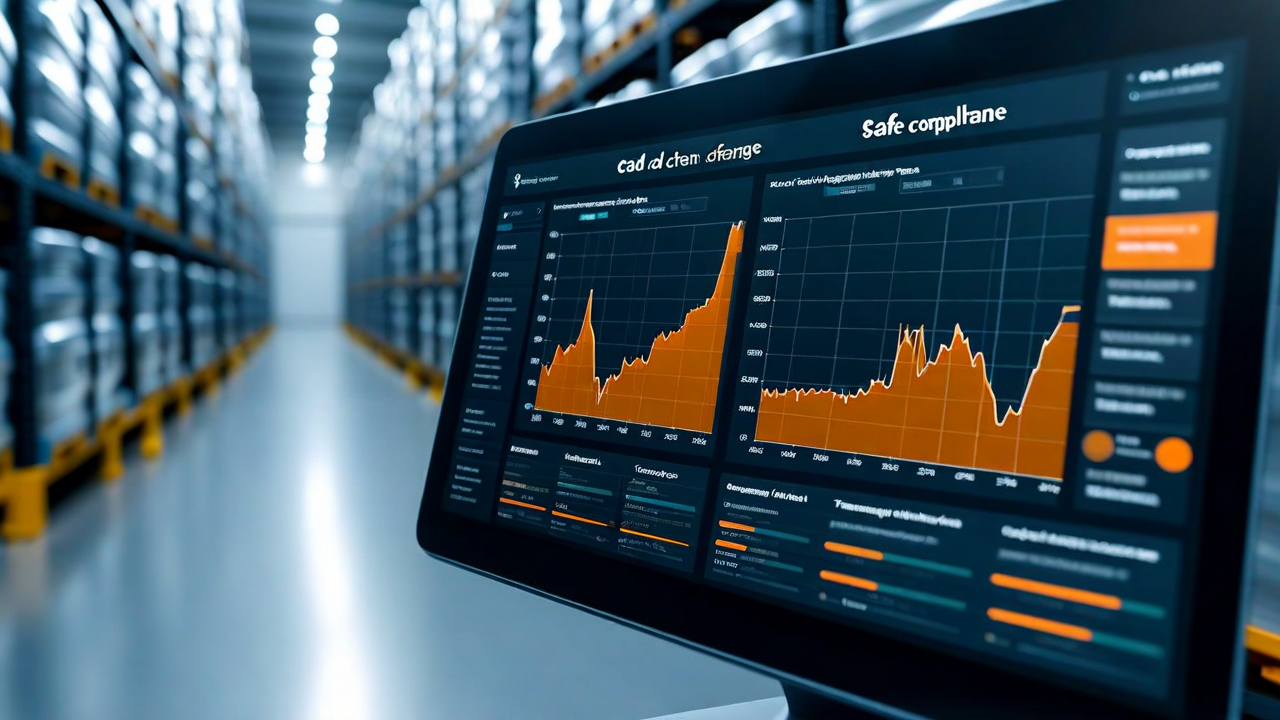
Cold chain logistics is one of the most demanding domains in supply chain management. Pharmaceutical biologics must maintain precise temperature ranges — often 2-8 degrees Celsius — throughout their journey from manufacturer to patient. Perishable food products have strict temperature requirements that affect both safety and shelf life. And the consequences of failure are not just financial: temperature excursions in pharmaceutical logistics can render life-saving medications ineffective; excursions in food logistics can cause illness and trigger regulatory action.
The compliance challenge is significant. Cold chain shipments involve multiple handoffs — manufacturing to airport, air cargo to ground transportation, warehouse to last-mile delivery — each of which represents a potential point of temperature failure. Regulatory requirements under FDA 21 CFR Part 211 and GDP guidelines require documented temperature evidence throughout the entire chain. And the diversity of cold chain requirements — frozen, refrigerated, controlled room temperature, ultra-cold — makes standardized monitoring difficult.
The Limitations of Traditional Cold Chain Monitoring
Traditional cold chain monitoring has relied primarily on passive temperature data loggers — devices that record temperature at intervals and are read out at delivery to determine whether an excursion occurred during transit. This approach has significant operational limitations that AI-powered systems overcome.
The most fundamental limitation is that passive loggers provide retrospective, not proactive, monitoring. If an excursion occurs during transit, you discover it at delivery — after the product has been exposed and any damage has been done. There is no opportunity to intervene during transit to prevent or minimize the excursion. The only options at delivery are to accept the product with documented excursion history, quarantine it pending investigation, or discard it.
Passive loggers also produce data that requires manual interpretation. Someone has to read out the logger, review the temperature trace, determine whether any excursions fall within acceptable mean kinetic temperature calculations, and document the decision. This process is time-consuming, error-prone when performed under time pressure, and difficult to scale across high shipment volumes.
Finally, passive monitoring provides no route-level intelligence. It tells you whether a specific shipment experienced an excursion, but it does not tell you which lanes, carriers, or facilities are systemically producing excursion risks. Without that aggregate intelligence, it is impossible to make evidence-based decisions about cold chain carrier selection, lane qualification, or facility performance management.
AI-Powered Cold Chain: Real-Time Monitoring and Predictive Intervention
AI-powered cold chain platforms replace retrospective logging with continuous real-time monitoring, predictive risk modeling, and automated alert workflows. The architecture involves three core components: connected monitoring devices that transmit temperature data continuously via cellular or satellite links, a predictive analytics engine that evaluates current temperature trends against excursion risk models, and an alerting and response workflow that ensures the right people receive actionable alerts at the right time.
The predictive component is what distinguishes AI monitoring from simple real-time temperature data. Instead of waiting for a temperature to breach a threshold before alerting, an AI system monitors the rate of change and trajectory of temperature readings and generates predictive alerts when the temperature is trending toward a threshold breach — typically with 30-90 minutes of warning before the breach would occur. This advance warning is operationally transformative: it enables intervention while there is still time to correct the thermal environment before product integrity is compromised.
Interventions triggered by predictive alerts can take several forms. For shipments that are still at origin or at an intermediate facility, the packing configuration can be adjusted — additional coolants added, packaging replaced, or the shipment moved to a better-controlled environment. For shipments in transit, the carrier can be contacted to address temperature control equipment failures or to accelerate delivery. For shipments approaching a critical threshold with limited intervention options, downstream stakeholders — the receiving facility, the quality team, the customer — can be notified early enough to prepare contingency responses.
Lane and Carrier Performance Intelligence
Beyond individual shipment monitoring, AI cold chain platforms generate aggregate intelligence about which lanes, carriers, and facilities are producing the most excursion risk. This intelligence is valuable for qualification decisions, carrier selection, and risk-based monitoring intensity allocation.
Lane-level analysis identifies which origin-destination routes historically generate the highest excursion rates. Summer lanes through high-heat regions, routes with long transit times and multiple handler changes, and lanes involving air cargo holds with poor thermal control tend to show elevated excursion rates. Understanding which lanes are highest risk allows cold chain managers to apply more robust packing configurations, choose more capable carriers, and allocate monitoring resources proportionally to risk level.
Carrier qualification analysis identifies which cold chain carriers consistently maintain temperature integrity and which have patterns of performance failures. In pharmaceutical cold chain, carrier qualification is a regulatory requirement under GDP — companies must demonstrate that their carriers have validated cold chain capability. AI-powered performance tracking provides continuous qualification evidence rather than relying solely on periodic lane qualification studies.
Facility performance monitoring tracks temperature integrity at warehouses, distribution centers, and other handling facilities in the cold chain. Dock-to-cold-storage transfer time is a frequent excursion risk point; facilities that consistently show long transfer times or inadequate dock staging areas can be flagged for process improvement interventions.
Regulatory Compliance Automation
Cold chain logistics in the pharmaceutical and food industries involves substantial regulatory documentation requirements. Every temperature-controlled shipment must have documented temperature evidence; out-of-specification events must be investigated and documented; carriers must have current qualification records on file. Managing this documentation manually across hundreds or thousands of shipments per month is extraordinarily labor-intensive.
AI cold chain platforms automate much of this documentation workflow. Temperature records are automatically compiled for each shipment and archived in a regulatory-compliant format. Out-of-specification events trigger automated investigation workflows that prompt the responsible teams to document the assessment and disposition decision. Carrier qualification records are maintained in the platform and automatically flagged for renewal before expiration.
The ROI from compliance automation alone is significant for pharmaceutical shippers. A quality team that previously spent 20-30% of its time compiling and reviewing temperature documentation can redirect that capacity to higher-value activities like supplier audit programs, process improvement initiatives, and proactive risk management.
Integration With Route Optimization for Cold Chain
Cold chain performance and route optimization are closely linked, but in many organizations they are managed separately. A route that is cost-optimal from a freight spend perspective may be suboptimal from a cold chain risk perspective — choosing a longer transit time to save on carrier cost may increase excursion risk in a temperature-challenging season, for example. True cold chain optimization requires considering both dimensions simultaneously.
The RouteBrain platform integrates cold chain performance data into the routing recommendation engine, enabling route optimization that balances freight cost against cold chain risk. For a pharmaceutical company routing a biologic shipment in summer, the system might recommend a marginally higher-cost route via a carrier with a strong cold chain performance record on that lane over a lower-cost carrier with a history of temperature excursions — a recommendation that is invisible to a pure-cost optimizer but highly valuable to a quality-conscious shipper.
This cold-chain-aware routing is increasingly important as regulators and customers raise their standards for temperature documentation and excursion rates. Companies that can demonstrate proactive cold chain risk management — including route selection decisions that incorporate carrier thermal performance — are better positioned in both regulatory inspections and customer qualification processes.
Key Takeaways
- Traditional passive temperature loggers are retrospective tools that identify excursions after they occur; AI monitoring enables proactive intervention during transit.
- Predictive alerts — generated when temperature is trending toward a threshold rather than after it is breached — provide 30-90 minutes of warning that enables preventive action.
- Aggregate lane and carrier performance intelligence enables risk-based monitoring intensity allocation and evidence-based carrier qualification decisions.
- Regulatory compliance documentation automation reduces quality team labor burden by 20-30% for pharmaceutical shippers with high cold chain shipment volumes.
- Cold-chain-aware route optimization balances freight cost against thermal performance risk, producing better total outcome than cost-only routing for temperature-sensitive commodities.
Conclusion
Cold chain compliance is no longer a challenge that can be managed adequately with passive monitoring and manual documentation. The regulatory environment is tightening, customer expectations are rising, and the cost of excursions — in product loss, regulatory risk, and customer relationship damage — is too high to accept when better tools are available. AI-powered cold chain platforms represent a meaningful step forward in temperature integrity management for pharmaceutical, food, and any other temperature-sensitive supply chain.
RouteBrain's cold chain capabilities are built into our broader supply chain intelligence platform, enabling unified management of route optimization and temperature performance. Contact our team to learn how we support cold chain logistics operations.