Carrier Rate Benchmarking: How to Know If You Are Overpaying for Freight
Information asymmetry is the freight market's oldest problem. Carriers know what comparable shippers are paying; most shippers do not. AI-powered benchmarking is closing that gap — and giving logistics teams the data they need to negotiate with confidence.
If you manage freight for a living, you have probably had the experience of accepting a carrier rate and wondering whether you could have done better. Maybe you got three quotes and chose the lowest. Maybe you accepted your preferred carrier's number without shopping it. Either way, you probably had limited visibility into what the market was actually bearing for that lane on that day.
This information asymmetry is not accidental. It is structural. Freight markets are opaque by design — carriers benefit when shippers do not have comprehensive rate intelligence because it limits the shippers' negotiating leverage. For decades, the only way to benchmark rates was through periodic RFP processes, industry surveys, or informal market intelligence from brokers — all of which provide lagging, incomplete data.
AI-powered freight benchmarking changes this by aggregating rate data continuously and making real-time comparisons available at the lane level. Understanding how this works — and what it means for carrier negotiation strategy — is increasingly important for logistics professionals who want to ensure they are paying competitive rates.
The Anatomy of Rate Overpayment
Rate overpayment in freight comes in several distinct forms, and understanding each is important for diagnosing where your organization's exposure is greatest.
Spot rate overpayment occurs when a shipper accepts a spot market quote that is above the current market benchmark for a given lane. This is most common when procurement teams are time-constrained — facing a shipment deadline with limited time to shop alternatives — or when they lack access to reliable benchmark data for less-traveled lanes. Industry data suggests that spot rate overpayment averages 8-15% above benchmark for shippers without real-time rate intelligence, with a long tail of outliers significantly higher.
Contract rate misalignment is a subtler but often larger problem. Contract rates are negotiated annually or semi-annually, and they are priced relative to market conditions at the time of negotiation. When market rates move significantly after a contract is signed — either up or down — the contract rate diverges from market. In a softening market, this means shippers are locked into above-market rates on their committed volumes. Without systematic benchmarking, contract misalignment is often not discovered until the next RFP cycle, by which point significant excess cost has been incurred.
Accessorial charge inflation is the third major category. Fuel surcharges, residential delivery fees, liftgate charges, detention fees — accessorial charges can add 20-35% to base freight rates and are highly variable across carriers. Without systematic tracking and benchmarking of accessorial charges by carrier, shippers cannot easily identify which carriers are applying above-market accessorial rates or find patterns of inconsistent charge application.
Lane coverage gaps occur when a shipper has strong benchmark intelligence for their high-volume lanes but limited visibility into rates for lower-volume or irregular lanes. Carriers often charge higher rates on lanes where shippers are less informed, precisely because information asymmetry is greater on those lanes. Systematic rate benchmarking across all lanes — not just the top 20 — is important for eliminating these hidden exposure areas.
How AI-Powered Benchmarking Works
Traditional rate benchmarking relied on collecting and comparing rates from multiple carriers on an ad hoc basis — requesting quotes, tracking market indices, and occasionally commissioning formal freight rate surveys. This approach produces useful data but is inherently lagging and incomplete. It tells you what rates were, not what they are, and it covers only the lanes and carriers you specifically researched.
AI-powered benchmarking changes the architecture in two fundamental ways. First, it aggregates rate data continuously at scale — not from periodic manual collection, but from automated ingestion of rate quotes, executed shipment records, and market rate feed APIs. The result is a real-time, comprehensive database of market rates across lanes, modes, carrier types, and service levels that is orders of magnitude larger and more current than anything assembled through manual processes.
Second, it applies machine learning to normalize and contextualize rate comparisons. Raw rate data is not directly comparable because rates vary by shipment characteristics — weight, dimensions, commodity class, accessorial requirements — and by market conditions at the time of quotation. AI models learn the rate function for each lane — how rates vary with shipment characteristics and market conditions — and can produce apples-to-apples benchmark comparisons that control for these factors.
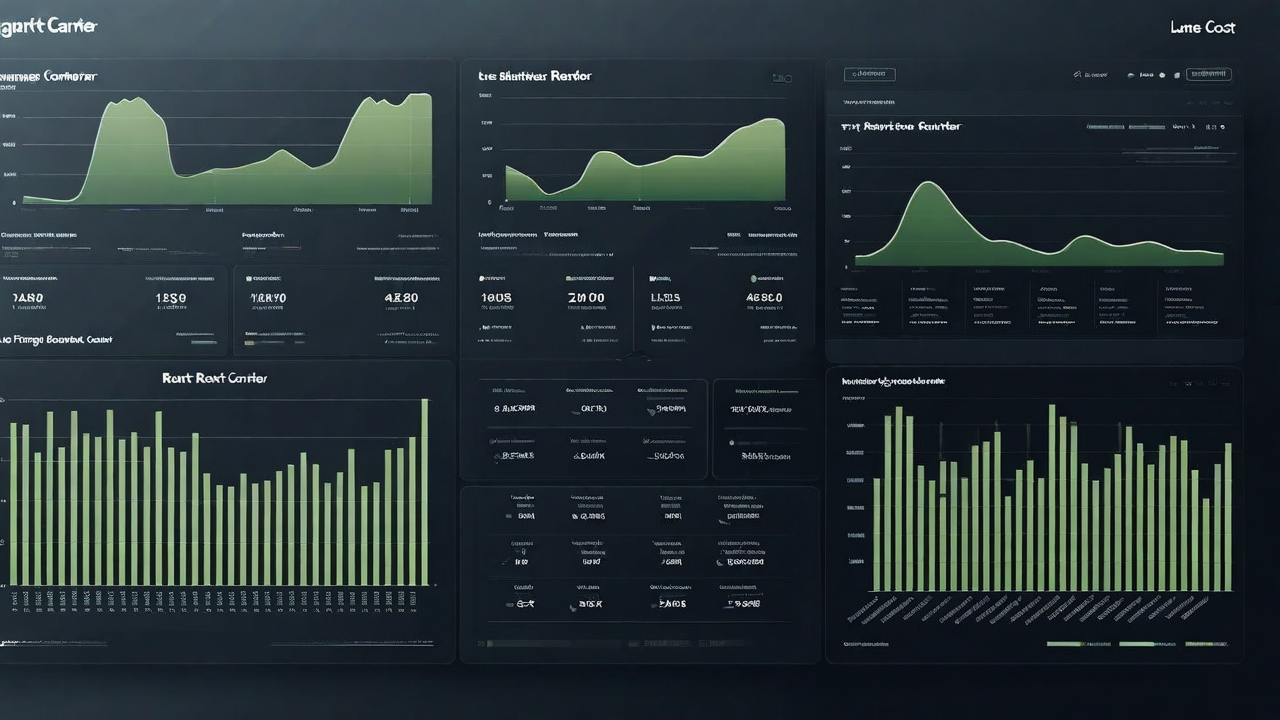
The output is a lane-level benchmark report that tells you, for any given shipment, what the current market rate range is for your specific characteristics, where your last accepted rate fell in that range, and which carrier options are currently priced competitively. The RouteBrain platform provides this benchmarking intelligence integrated into the routing recommendation workflow, so your team sees rate context at the point of decision rather than in a separate analysis.
Turning Benchmark Data into Negotiating Leverage
Rate intelligence is only valuable if you act on it. The most important application of benchmarking data is improving carrier negotiation outcomes — both in the annual RFP process and in day-to-day rate negotiations.
In annual RFP negotiations, benchmark data shifts the conversation fundamentally. Instead of negotiating based on what carriers propose and what you feel you can push back on, you negotiate from a position of documented market intelligence: your benchmark data shows market rates are X on this lane, your carrier is proposing Y, and you are asking them to close the gap. This is a much stronger negotiating position than arguing from gut instinct or anecdote, and it produces better outcomes consistently.
Benchmark data is also powerful for identifying which carriers to prioritize in RFP invitations. If your data shows that a particular carrier consistently prices at the high end of the market range on your most important lanes, you have a data-driven basis for deprioritizing them in favor of carriers who price more competitively. This kind of evidence-based carrier selection is difficult without systematic benchmarking but becomes straightforward with it.
For day-to-day spot market procurement, benchmark data enables real-time negotiation at quote time. If a carrier's spot quote exceeds the market benchmark by a significant margin, your team can push back with specific market intelligence rather than simply accepting the rate or declining and moving on. This kind of real-time negotiation capability is rare in logistics teams today but is a significant competitive advantage for companies that develop it.
Common Misconceptions About Freight Benchmarking
A few misconceptions about freight benchmarking are worth addressing directly, because they lead some logistics teams to underinvest in rate intelligence.
The most common misconception is that benchmarking is only valuable for high-volume shippers. In fact, the benefit-to-cost ratio of rate intelligence is often higher for mid-market shippers than for large ones, precisely because large shippers have more negotiating leverage and tend to achieve closer-to-market rates through volume alone. Mid-market shippers lack that volume leverage and are more dependent on information parity to negotiate effectively.
A second misconception is that your 3PL or freight broker handles benchmarking on your behalf. Brokers and 3PLs do have market rate visibility, but their incentives are not perfectly aligned with your interest in minimizing costs — they earn margin on the spread between what you pay and what they pay carriers. Having your own independent rate intelligence, separate from what your intermediaries provide, is important for maintaining informed oversight of your freight spend.
A third misconception is that benchmark data is only useful at contract negotiation time. In fact, continuous benchmarking enables ongoing cost management throughout the contract period — identifying lanes where your contract rates have diverged from market, flagging carrier performance issues early, and providing data for mid-term contract renegotiations when market conditions shift significantly.
Building a Continuous Benchmarking Discipline
Getting maximum value from freight benchmarking requires treating it as a continuous process rather than a point-in-time exercise. A few practices define organizations that do this well.
Regular lane-level rate audits — quarterly at minimum — compare current contracted rates to market benchmarks and flag lanes where the gap has grown beyond a defined threshold. This systematic monitoring ensures that contract misalignment is caught early rather than discovered at the next RFP.
Exception-driven spot market monitoring surfaces individual rate quotes that exceed benchmark by a defined percentage, triggering a negotiation workflow before the quote is accepted. This process can be automated in AI-enabled routing platforms, reducing the human effort required to maintain continuous rate vigilance.
Carrier performance dashboards that combine rate benchmarking with transit time performance and accessorial charge history give logistics leaders a complete picture of carrier value — not just price in isolation, but price relative to performance. A carrier that charges 5% above market but delivers 8% better on-time performance may offer superior total value; a carrier at 10% above market with average performance does not.
Key Takeaways
- Rate overpayment comes in four main forms: spot rate premiums, contract rate misalignment, accessorial charge inflation, and coverage gaps on lower-volume lanes.
- AI-powered benchmarking aggregates rate data continuously at scale and applies ML normalization to enable apples-to-apples lane-level comparisons.
- Benchmark data is most powerful when used as negotiating evidence in carrier RFPs and as a real-time filter at spot market quote time.
- Mid-market shippers often benefit more from rate intelligence than large shippers because they have less volume leverage to substitute for information leverage.
- Continuous benchmarking — not just point-in-time RFP analysis — is required to stay current as markets shift throughout the contract period.
- Carrier value assessment requires combining rate benchmarking with transit performance and accessorial history for a complete cost-versus-performance picture.
Conclusion
The information asymmetry that has historically characterized the freight market is eroding. AI-powered benchmarking tools are giving logistics teams the rate intelligence they need to negotiate from a position of knowledge rather than guesswork — and the companies that use this intelligence effectively are consistently achieving better freight economics than those that do not.
RouteBrain incorporates carrier rate benchmarking intelligence directly into the routing recommendation workflow, giving your team real-time market context at the point of every routing decision. Explore the platform or talk to us to learn more.